Protect Your Pool Investment Before Winter Hits
Closing a pool the right way protects everything you have put into it, from the finish and tile to the equipment and concrete around it. In the Four-State area, our climate brings freeze and thaw cycles, quick temperature swings, and heavy fall leaves that can all be hard on a pool. A good closing helps your pool ride out those months without surprise damage.
Not every pool closing service is the same. When steps get skipped or rushed, the result often shows up in the spring as cloudy water, cracked plumbing, or damaged equipment. That means more repairs, more time, and a longer wait before you can swim again.
We want homeowners to feel confident about what is happening during a closing. Below is a clear, simple checklist of what a professional pool closing service in Joplin, MO, should include, so you know what to expect and which questions to ask before anyone starts.
Timing Your Pool Closing for Joplin Weather
Around our area, timing is one of the biggest keys to a smooth closing. A good rule of thumb is to wait until the water is around 50 to 60 degrees. At this point, algae growth slows down, but you are still ahead of hard freezes.
Most pools in Joplin close sometime between late September and early November. Closing too early, when water is still warm, can lead to algae growth under the cover. Waiting too long can expose your pool and plumbing to sudden cold snaps and ice.
A local pro should be paying close attention to the forecast. In the Ozarks, we all know how fast the weather can swing from warm to cold. That is why flexible scheduling and local experience matter.
Some signs your pool is ready to close include:
- People are barely using the pool anymore
- Nights are staying consistently cool
- Leaves are starting to drop in your yard
Planning a closing before the first frost rush keeps the visit calm and complete, instead of a last-minute scramble before a cold front.
Must-Have Water Balancing and Cleaning Steps
Before anyone puts your pool to bed for winter, it should be as clean as possible. Leftover debris and dirty water can stain surfaces, clog lines, and feed algae.
A thorough pre-closing cleaning should include:
- Brushing the walls and steps to remove film and small debris
- Vacuuming the floor so dirt and leaves do not sit all winter
- Skimming the surface to collect floating leaves and bugs
- Cleaning skimmer baskets and emptying pump and filter baskets
Once the pool is physically clean, the water chemistry needs attention. A proper pool closing service in Joplin, MO should include:
- Testing pH, alkalinity, and calcium hardness
- Adjusting those levels into a recommended range for your pool type
- Shocking the pool to kill off bacteria and clear up organics
- Adding a winter algaecide to help prevent algae growth under the cover
After chemicals are added, the pump should run long enough to spread them evenly through the water. Starting winter with clean, balanced water makes opening faster and easier. It can also protect surfaces and equipment and help you get back to swimming quicker when warm weather returns.
Equipment Winterization and Freeze Protection
Water is great in a pool, but when it freezes inside pipes and equipment, it can cause serious damage. Proper winterization is one of the most important parts of any closing service.
At a minimum, equipment winterization should cover:
- Lowering the water level to the proper height for your pool and cover type
- Blowing out and plugging underground lines so water cannot sit and freeze inside them
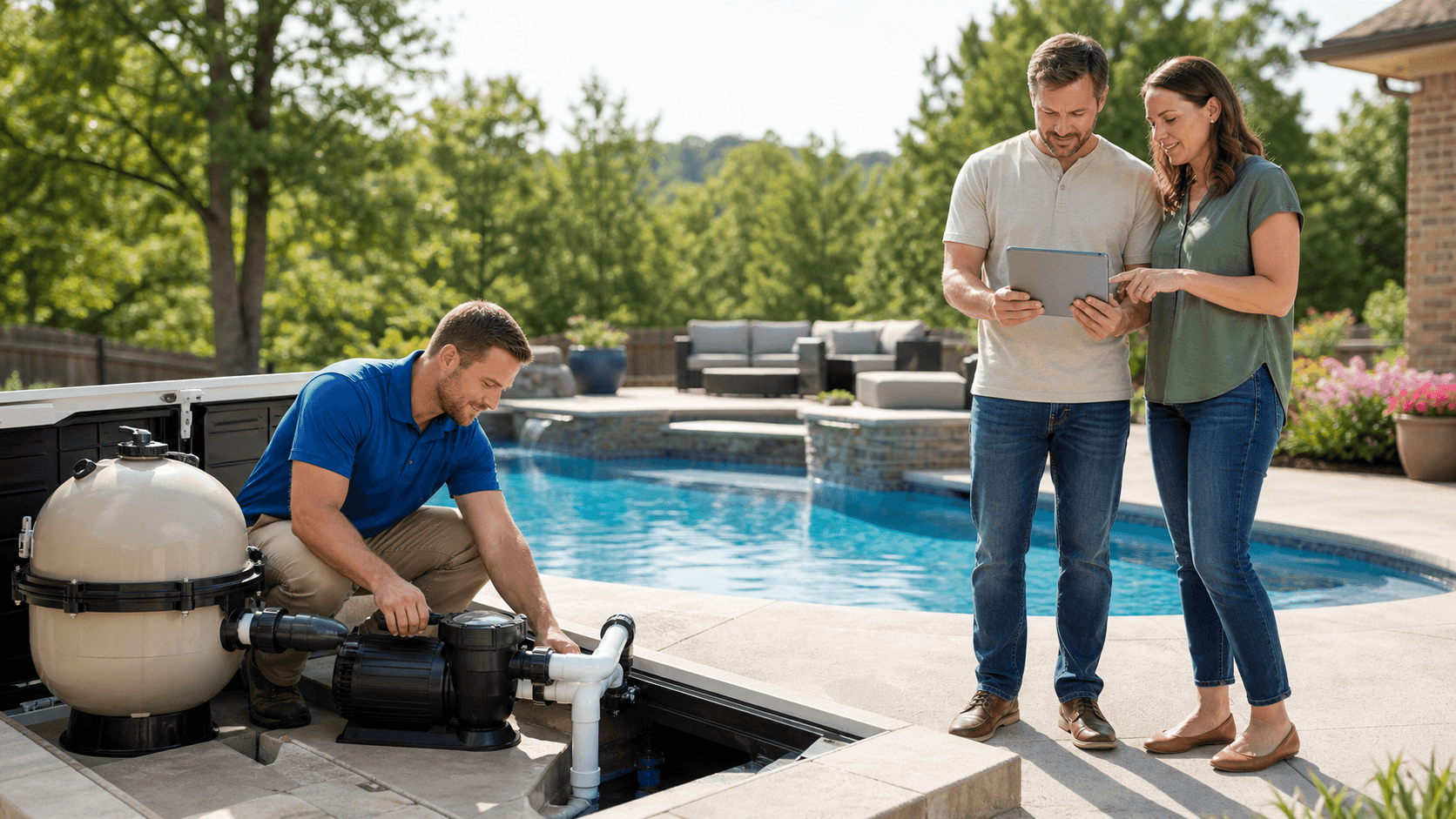
- Draining and winterizing pumps, filters, and heaters
- Shutting down and protecting any attached features, like deck jets or waterfalls
In some setups, pool-grade antifreeze may be added to certain lines for added freeze protection. Drain plugs should be removed from equipment so trapped water can escape. This helps protect pumps, filters, heaters, and plumbing from cracking as temperatures drop and rise again.
A careful pool closing also includes a quick inspection. Noticing small issues like slow leaks, worn gaskets, or failing seals before winter gives you time to plan repairs. Left alone, those small problems can grow over the colder months and surprise you in spring.
Choosing and Installing the Right Winter Cover
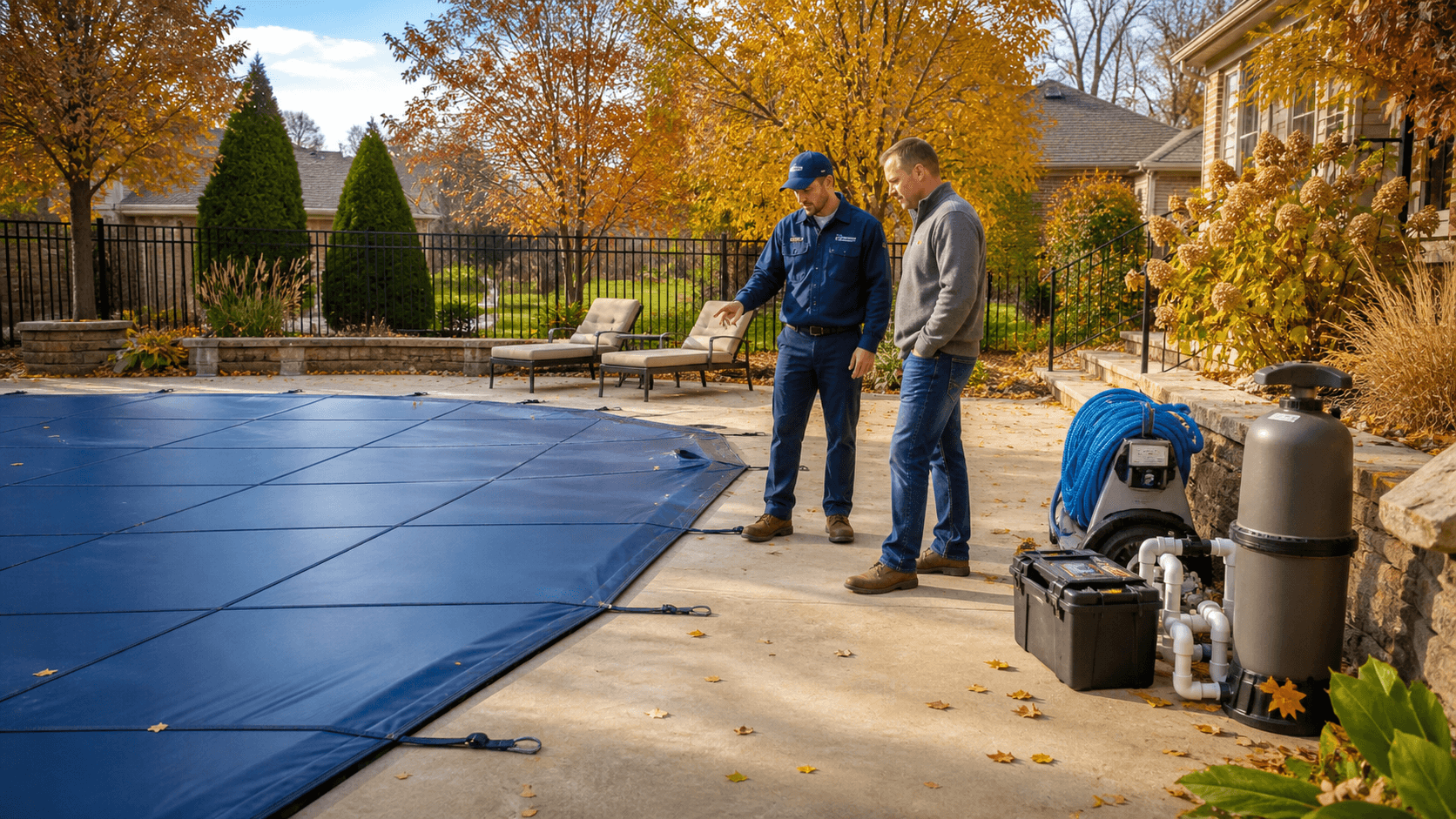
The winter cover is your pool's shield for the off-season. Picking the right one, and having it fitted correctly, makes a big difference in both safety and cleanup.
The three main cover types are:
- Solid covers that block light and debris, good for heavy leaf yards
- Mesh covers that let water pass through while blocking larger debris
- Safety covers that anchor to the deck and add a higher level of security
Each style has pros and cons based on how many trees you have, how windy your yard is, and how much extra safety you want for kids and pets. A professional will help match the cover type to your backyard.
A proper cover install should include:
- Measuring the pool carefully to get a good fit
- Setting and checking anchors to make sure they are secure
- Tightening straps so the cover stays firm without being overstressed
- Checking for gaps where leaves or small animals could get under
Once the cover is on, it still needs a little attention through winter. It helps to:
- Remove excess water from solid covers so they do not sag
- Clear off heavy piles of leaves or branches
- Check anchors and straps now and then to keep everything snug
Good cover care keeps things safer and cuts down on the work needed when it is time to open again.
What to Expect From a Professional Closing Visit
When you book a pool closing service in Joplin, MO, you should feel clear on what is included from start to finish. A complete visit normally follows a simple flow.
You can expect a pro closing to include:
- A walkaround inspection of the pool, deck, and equipment
- Thorough cleaning of the water and baskets
- Testing and balancing of water chemistry, plus closing chemicals
- Winterization of equipment, plumbing, and features
- Secure installation of the winter cover, with a final safety check
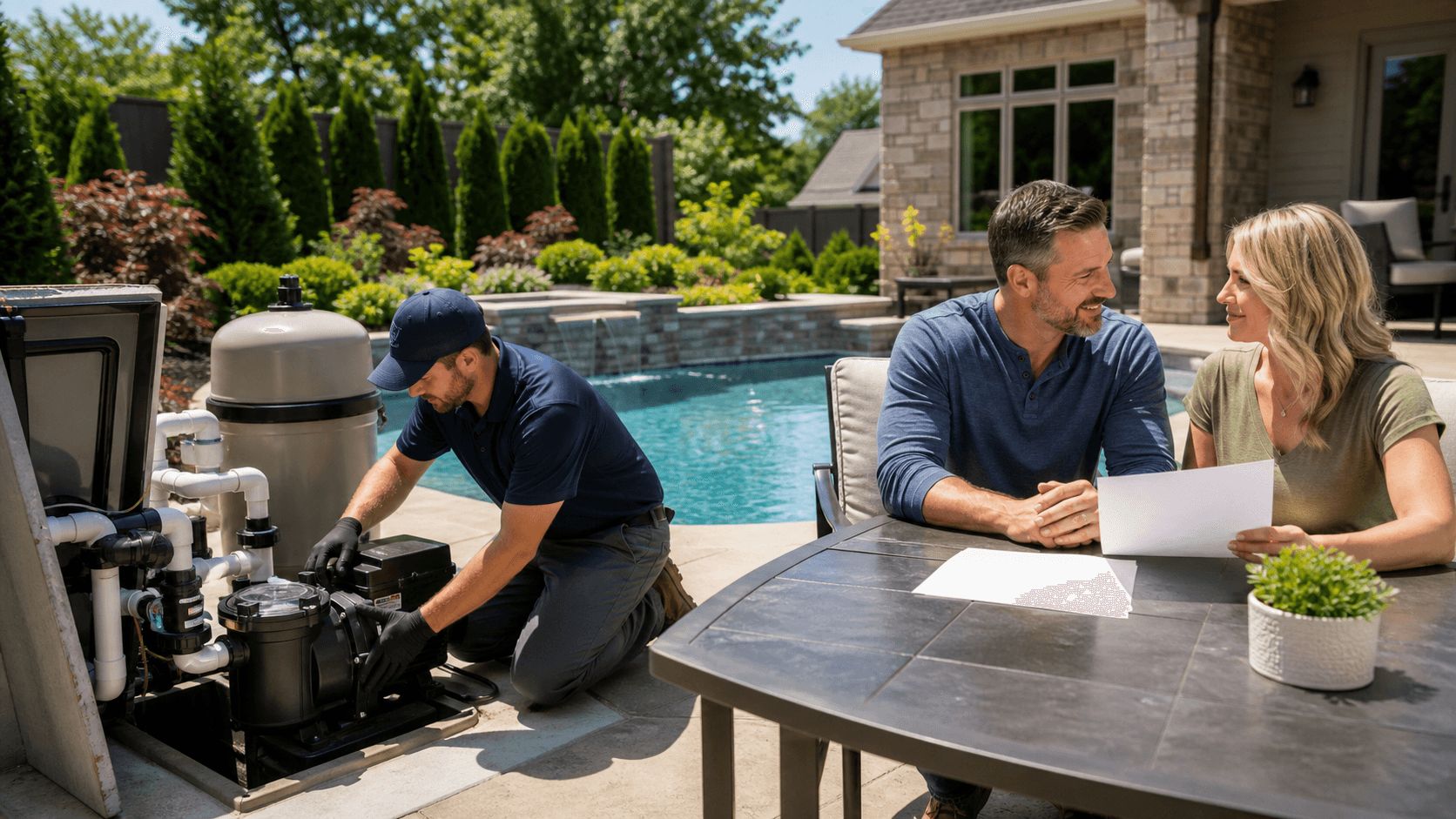
Good communication is just as important as the work itself. Your technician should be able to explain what was done, leave a simple chemistry and service report, and point out any issues that might need attention before opening season.
Many homeowners in the Four-State area also choose ongoing service and protection plans. These plans can include things like priority scheduling, bundled opening and closing visits, and routine checks that support equipment protection. For a lot of families, this brings peace of mind that their pool is being watched over all year long.
Protect Your Pool Investment Before the Season Ends
If you want your pool to open clean, safe, and ready next year, let Ozark Pool and Concrete handle every detail with our professional pool closing service in Joplin, MO. We take care of the water chemistry, equipment, and cover so you do not face costly surprises in the spring. Have questions or need a specific date locked in? Simply contact us and we will help you schedule the closing that works best for you.