Stretch Your Pool Budget Without a Full Renovation
Upgrading pool equipment is one of the simplest ways to lower monthly bills without tearing up your backyard. Many Joplin homeowners want one more season of fun without taking on a major construction project, and smart equipment changes can make that possible.
With the right upgrades, you can cut energy use, improve comfort, and help your current pool last longer. You keep the pool shell and deck you already have, while the "engine" behind the scenes gets smarter and more efficient. That is the focus here: how to plan pool equipment upgrades in Joplin, MO, so you get real savings and a clear payback timeline.
In our area, energy rates, weather, and even storm debris all affect how your pool runs and what you pay each month. We will walk through how that plays into your budget, what types of equipment usually make the biggest difference, and how to think about return on investment without going into a full renovation.
How Joplin Climate and Utility Rates Shape ROI
Joplin summers are long, hot, and humid, so most backyard pools run for many hours a day. Pumps and heaters work hard from late spring through early fall, and that constant run time is what drives your energy costs.
Here is how local conditions affect your payback:
- Long cooling season means more hours on the pump
- Warm shoulder seasons mean more people heat their pools
- Storms and wind bring leaves, dirt, and dust into the water
All of that adds up to more strain on older, less efficient pumps and heaters. Single-speed pumps, for example, usually run at one high speed even when your pool does not need that much flow. That can waste power every single day the pool is open.
Utility rates in the Four-State area are not the highest in the country, but they are high enough that wasted energy adds up quickly over a full season. The more your equipment runs, the more important efficiency becomes. Over time, better equipment can pay for itself just by reducing how much power and fuel you use.
Fall is a smart planning window. The weather is milder, demand for service is usually a bit lighter, and there is time to review bills and options. If upgrades are selected and installed during the cooler months, your system can be tuned and ready before the first heat wave hits.
High-Impact Equipment Upgrades Most Joplin Pools Need
Not every upgrade has the same impact. Some pieces of equipment affect your energy use every single hour your pool is on. Those are usually the best place to start.
Here are the common high-ROI upgrades we see in Joplin:
- Variable-speed pool pump
- Energy-efficient pool heater
- LED lighting and smart controls
- Filter upgrades for easier, cleaner circulation
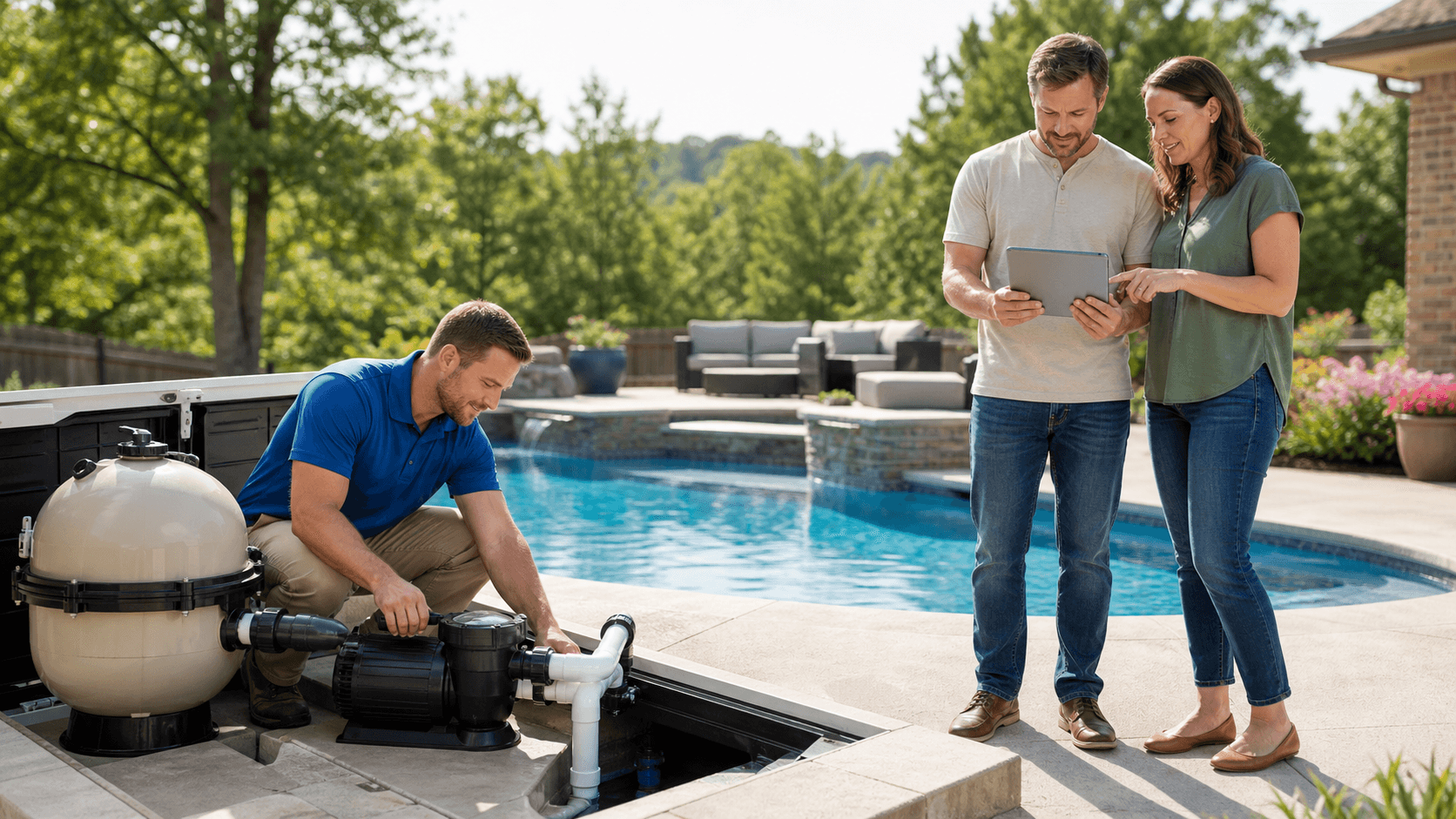
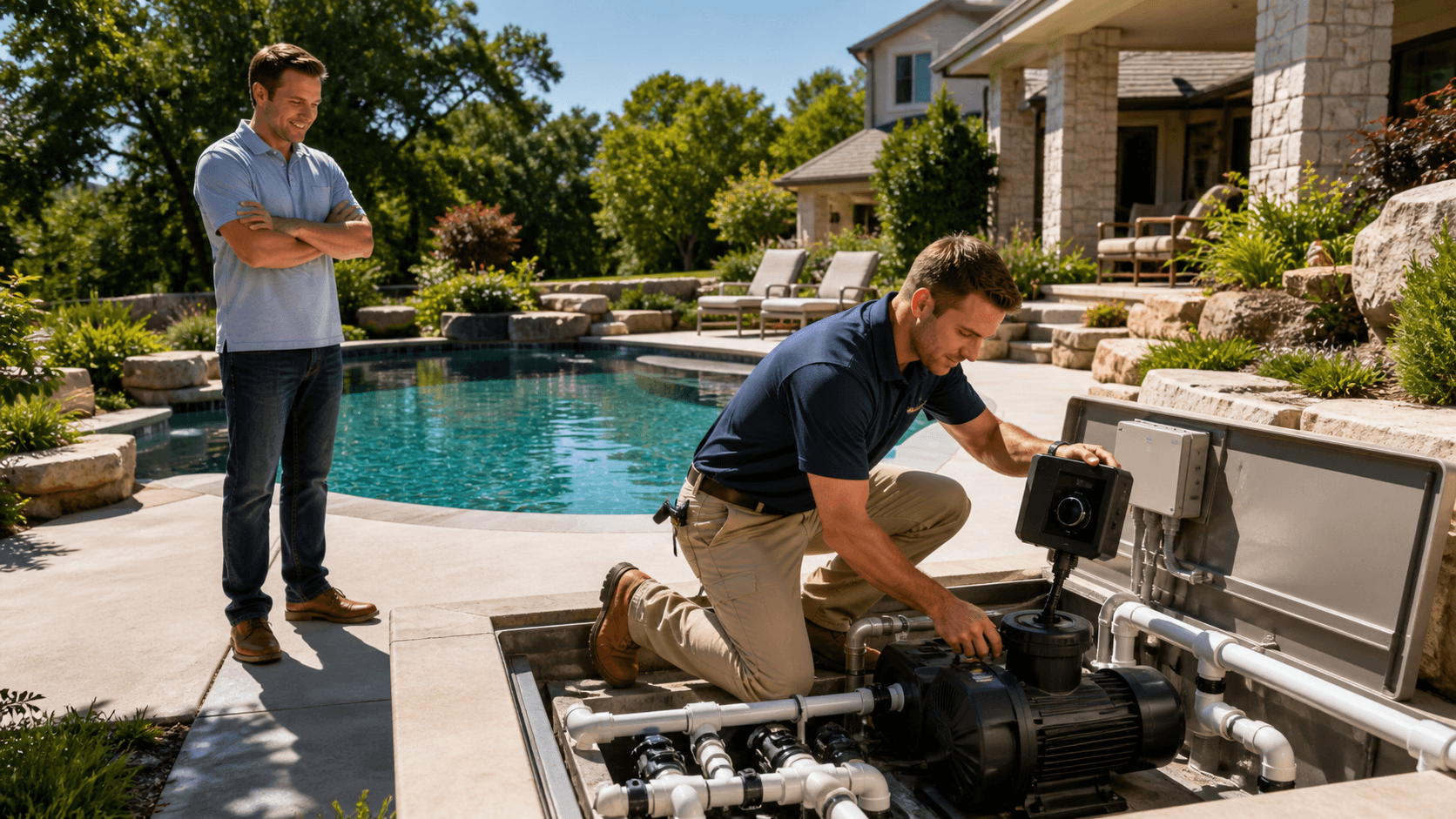
A variable-speed pump lets the motor run at lower speeds for most of the day and at higher speed only when needed, like for cleaning or running certain features. Because power draw changes with speed, that shift to lower-speed run time can create a noticeable drop in energy use for a typical backyard pool.
Heaters are another big factor. In our area, many pools are fine with a more efficient gas heater or a heat pump, depending on how early and how late you like to swim and how often you use the pool. Better heater technology can reduce how much gas or electricity you burn to keep the water comfortable during cooler nights and shoulder seasons.
Then there are supporting upgrades that improve comfort and ease of use:
- LED pool lights that use less power and last longer than older bulbs
- Automation systems that control pump, heater, and lights on a set schedule
- Cartridge or efficient sand filters that keep water cleaner with less strain on the pump
The key is that all of these changes can usually be made in the equipment area without touching your pool shell, surface, or deck. That means no major demolition, less disruption, and a more manageable project while still improving how your pool runs.
Estimating Savings and Payback for Your Joplin Pool
You do not need advanced math to get a rough idea of savings. A simple, step-by-step look at your pool's energy use can help you decide what makes sense.
Start with this process:
- Pull last season's electric and gas bills
- Note which months the pool was open and running
- Estimate what share of those bills likely came from the pool
- Look at current pump run times and heater use
From there, you can compare that baseline to an upgraded setup. Variable-speed pumps and efficient heaters are designed to cut the amount of energy needed to get the same job done. Many homeowners find that spreading those savings over several seasons covers a large part of the upgrade cost.
For a typical Joplin pool, the biggest pieces of the operating cost puzzle are:
- Pump run time and speed
- How often the heater runs in spring and fall
- Filter condition and cleanliness
- How debris and water quality affect circulation
When you combine a more efficient pump with better scheduling, smarter heater use, and small add-ons like LED lights, the gains stack together. That can shorten the payback window compared to doing each change on its own.
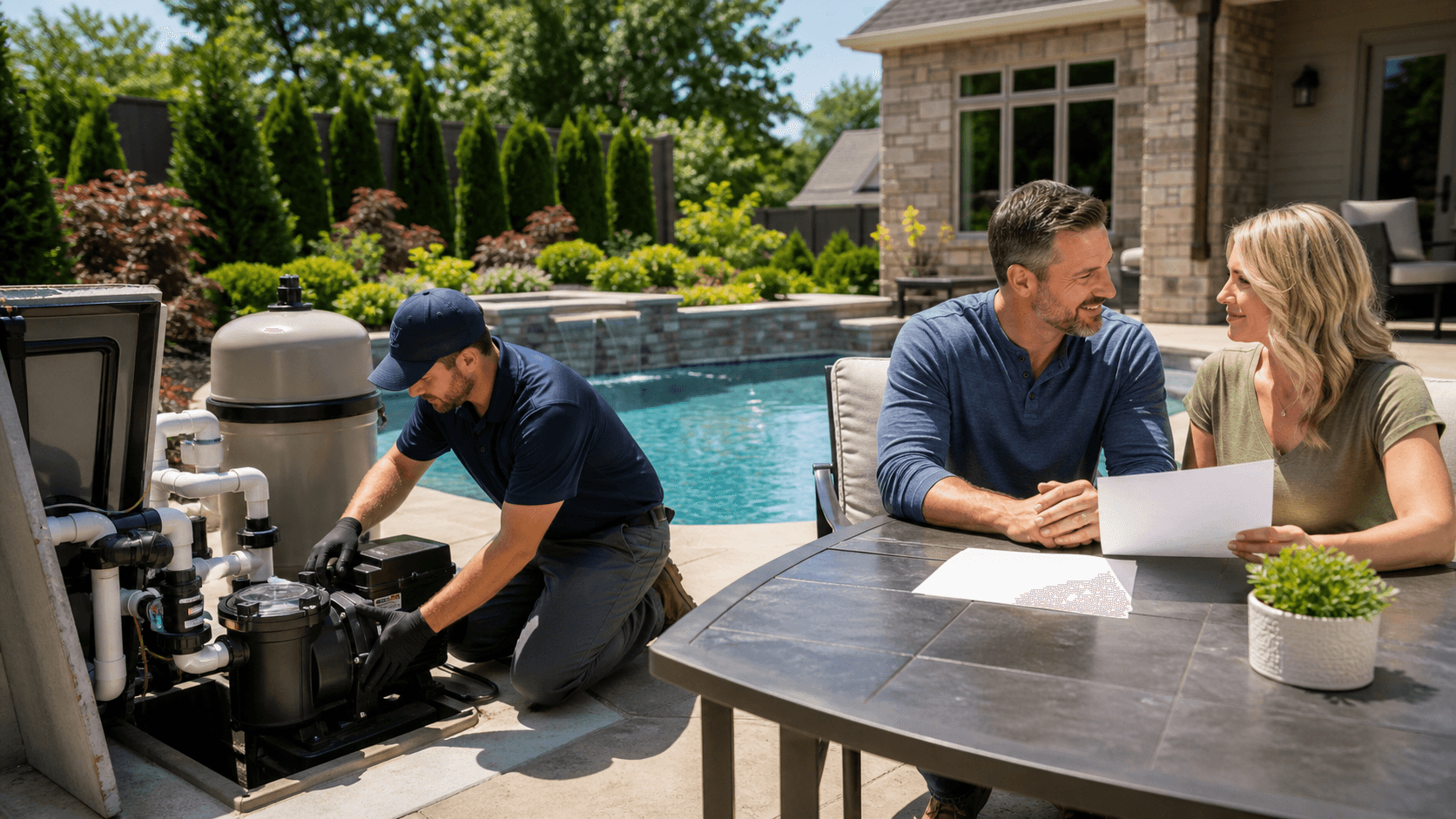
Professional on-site assessments are helpful because they use real-world data instead of national averages. Actual equipment specs, existing plumbing, and local rate assumptions give a more accurate picture of how long it might take for upgrades to pay for themselves in your backyard, not someone else's.
Rebates, Incentives, and Financing Options in Joplin
Rebates and incentives are often the missing piece that turns a "maybe later" upgrade into a clear win. Many Joplin-area homeowners are surprised to learn how many programs may be available for energy-saving equipment.
Common sources to review include:
- Local electric utility rebates for efficient or ENERGY STAR variable-speed pumps
- Gas or electric incentives for efficient heaters or smart controls
- Manufacturer rebates on certain models of pumps, heaters, or automation systems
- Seasonal promotions on equipment during slower times of the year
These offers can change, so it pays to check current details when you are planning. In some cases, you can "stack" a utility rebate with a manufacturer rebate, which lowers the true out-of-pocket cost of the upgrade.
When your upfront cost is lower, your payback timeline shortens. A project that might have taken several seasons to cover itself from energy savings alone could turn into something that pays off noticeably quicker once rebates are factored in.
Financing or payment options can also help line things up so that your monthly pool equipment payment is closer to your monthly utility savings. That way you are shifting dollars from energy waste into ownership of better equipment, instead of putting off needed updates.
Plan Your Next Season's Savings with Local Pros
The slower months are the ideal time to think clearly about your pool. The water is cooler, schedules are usually less hectic, and you can look at bills and equipment without the pressure of a heat wave.
A simple planning checklist can help:
- Gather last season's electric and gas bills and note pool months
- Take photos of your current pump, heater, filter, and pad layout
- Write down how often you ran your pump and heater
- List what bugs you most: high bills, noise, cold water, constant cleaning
Then, talk with a local pool professional and ask for at least two upgrade paths, such as pump-only versus pump plus heater, or equipment plus automation, and ask for written estimates that include projected savings, not just parts and labor, so you can compare payback timelines side by side.
As a Joplin-based company serving the Four-State area, we work every day with the same climate, utility rates, and storm patterns that you deal with in your own backyard. That local experience helps us design, build, renovate, and maintain pool systems that are energy smart, comfortable to use, and ready for many more swim seasons without the need for a full renovation.
Get Started With Your Project Today
If you are ready to get more reliable performance and lower maintenance from your pool, we are here to help you choose the right pool equipment upgrades in Joplin, MO for your backyard. At Ozark Pool and Concrete, we take the time to understand how you use your pool so we can recommend upgrades that actually make a difference. Reach out today to talk through your options, ask questions, or schedule a visit, or simply contact us to get your project on the calendar.