Safer Summer Pool Days Start with the Deck
Pool safety is not only about what happens in the water. It also depends on what you are standing on. A slick, cracked, or poorly drained concrete deck can cause just as much trouble as a deep end that is too close to a diving board.
Around Joplin, long hot days and heavy rain keep pool decks wet for hours. When water sits on worn concrete, you get slippery spots, algae, and loose pieces that can trip kids, guests, and older family members. That is why the design of your pool deck surface is so important.
In this article, we will walk through how smart concrete planning, slip-resistant finishes, and the right drainage and coping details work together to prevent accidents and protect your outdoor space. We will also talk about why local weather and soil conditions make it especially helpful to work with concrete contractors in Joplin, Missouri who understand our area.
Why Joplin Weather Makes Deck Safety Tricky
Around the Four State area, pool decks take a beating. Summer sun bakes the surface, then a pop-up thunderstorm hits, and the concrete stays damp and slick. High humidity does not let that moisture dry off quickly, which keeps your deck wet longer.
On top of that, we deal with:
- Sudden heavy downpours that create big puddles
- Clay soils that swell when wet and shrink when dry
- Freeze-thaw cycles that stress concrete in cooler seasons
- Shifting ground that can move slabs and open cracks
All of this affects how a pool deck behaves. If the concrete is too flat or slopes the wrong way, water sits where it should not. If joints and expansion gaps are not planned well for local soils, you get cracking, lifting, and uneven edges that turn into trip hazards.
Local building rules, drainage patterns, and neighborhood grading also matter. What works in a dry climate often fails here. That is why working with concrete contractors in Joplin, Missouri who understand our rain, our clay, and our freeze-thaw swings helps your deck stay safer and more stable through the seasons.
Slip-Resistant Concrete Finishes That Actually Work
The finish on your concrete has a big impact on how safe it feels when wet. Some textures give great traction but might be too rough on bare feet. Others look pretty but become slick with a thin film of water.
Here is how common pool deck finishes stack up:
- Broom finish: Simple, reliable traction, easy on bare feet, and blends well with basic patios.
- Exposed aggregate: Small stones give strong grip, but can feel a bit rough if not done carefully.
- Stamped concrete with texture: Can look like stone or wood, traction depends on pattern and sealer.
- Spray or knockdown coatings: Applied over concrete, cooler underfoot and can be very slip-resistant when textured correctly.
Surface temperature matters too. Darker colors hold more heat, which can burn feet in August. Lighter tones and some spray coatings help keep things cooler.
The sealer you choose also changes how safe the surface feels:
- Penetrating sealers soak in and help protect without changing the texture much.
- Film-forming sealers sit on top and can get slippery if glossy or applied too thick.
- Anti-slip additives can be mixed into sealers or coatings to add grip.
For many Joplin-area homes, we often suggest:
- Light broom finish or knockdown coating for simple, safe traction
- Textured stamped concrete matched to existing patios, sealed with a low-sheen product
- Regular re-sealing every few years to keep grip and protect from pool chemicals and sun
Before you choose a finish, it helps to ask your contractor for samples you can feel with wet feet. That small step can prevent big headaches later.
Getting Slope and Drainage Right From Day One
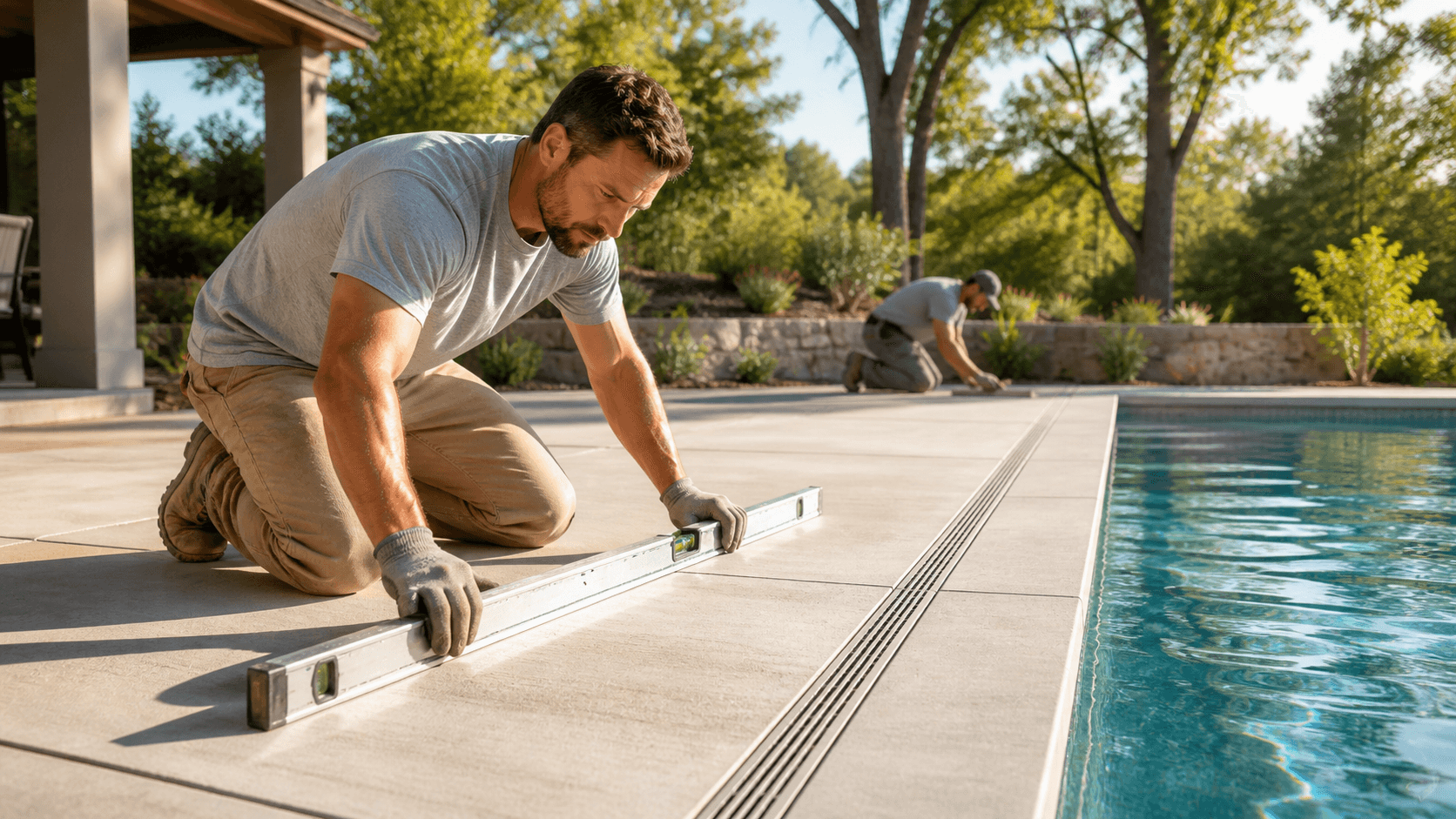
Even the best finish will not feel safe if water has nowhere to go. A good pool deck should gently slope away from the pool and the house so puddles do not form and water does not run toward your foundation.
A common target is roughly 1/8 to 1/4 inch of fall per foot of concrete. It is a small tilt that you barely notice, but it makes a big difference in how fast water clears after a swim or a storm.
There are several drainage tools that can work around a pool:
- Area drains that collect water in low spots and move it through pipes
- Channel or trench drains set along straight lines or at doorways
- Raised or lowered deck sections that naturally guide water away
- Outlets that send water to safe discharge points, not into basements or neighbors' yards
When drainage is poor, you may see:
- Standing water that grows algae and stays slick
- Erosion under the slab that leads to cracks or sinking
- Water running back toward the house, crawlspace, or patio doors
Experienced pool and concrete crews plan slopes during layout, compact the base soil or gravel properly, and install drains where needed. Around Joplin, that planning has to handle both quick summer downpours and slower, steady rains.
Coping, Edges, and Transitions That Protect Swimmers
Coping is the finished edge that frames your pool where the water meets the deck. It does a lot more than just look nice. It is often where feet, hands, and even heads hit when people climb in and out.
Common coping styles include:
- Bull-nose coping with a rounded front that is gentle on shins and toes
- Cantilever concrete coping, where the deck itself overhangs the pool wall
- Precast coping pieces that come in different profiles and textures
The safest coping tends to have:
- Rounded edges instead of sharp corners
- A slightly textured surface for grip
- A profile that does not catch toes or create a trip line
Transitions between surfaces matter too. Where concrete meets grass, pavers, or interior thresholds, small height changes can cause stumbles. Keeping these changes smooth, with gentle ramps or flush joints, helps people move safely, even when they are wet or carrying towels and coolers.
Maintenance Habits That Keep Decks Safe Longer
Even a well-built deck needs basic care to stay safe. Late summer and fall are good times to look closely at how your pool area is holding up.
A simple seasonal checklist might include:
- Rinsing and cleaning algae, mildew, and dirt from textured areas
- Watching for spots where water sits longer than it should
- Checking for cracks, flaking sealer, or spalling concrete
- Noting any lifted edges or settled sections that create trip points
Periodic re-sealing and touch-ups of textured coatings help:
- Maintain slip resistance
- Protect from pool chemicals and UV rays
- Reduce damage from freeze-thaw cycles in cooler months
For cleaning, mild, concrete-safe cleaners and plenty of rinsing work better than strong soaps that leave slick residue. Power washing can help lift dirt and algae, but if the pressure is too high or the wand is held too close, it can damage the surface or strip coatings.
Simple cleaning is often fine for homeowners to handle. For crack repairs, re-sloping, new drainage, or resurfacing, it is usually safer and more effective to bring in professional concrete contractors in Joplin, Missouri who understand pool environments.
Plan Your Safer Pool Deck Before Next Swim Season
As the swimming season winds down, it is a smart time to walk your pool deck and look for slick spots, standing water, loose or chipped coping, and uneven transitions. Catching these issues early makes repairs easier and helps keep next year's pool days more relaxed.
Planning upgrades in late summer or fall gives you time to think through finishes, drainage, and coping details without rushing. Thoughtful design, good texture, and smart water management do more than prevent accidents. They make your outdoor space more comfortable and enjoyable for the long run, so your pool area feels like the safe, welcoming backyard spot it should be.
Get Started With Your Project Today
If you are ready to transform your outdoor space, our team at Ozark Pool and Concrete is here to help you plan the details and timeline that fit your needs. Explore what our concrete contractors in Joplin, Missouri can do for your pool, patio, driveway, or custom project. When you are set to move forward or have questions about your options, simply contact us and we will respond promptly to discuss the next steps together.