Avoid Costly Patio Failures Before They Start
A concrete patio should feel solid under your feet, look good with your home, and handle everyday life without falling apart. In our area, that means standing up to hot summers, cold winters, heavy rain, and plenty of backyard gatherings. When the design is right from the start, a patio can handle all of it for many years.
The trouble starts when the focus is only on how the patio looks. Color, stamp patterns, and borders are fun to choose, but what you cannot see under and inside the concrete often matters more. Hidden design mistakes quietly shorten the life of a patio, and the damage may not show until a few seasons later.
Here around Joplin, we deal with clay-heavy soils, quick temperature swings, and strong spring storms. That mix can be hard on concrete if the design is weak. We want to walk through the biggest design mistakes that shorten the life of concrete patios in Joplin and explain how better choices at the start can give you a patio that lasts.
Skimping on Base and Drainage Design
One of the fastest ways to ruin a patio is pouring concrete right over grass, soft dirt, or topsoil. It might look fine on day one, but as that soft layer settles and holds water, the slab starts to sink, tilt, or crack.
A solid patio base in our area usually means:
- Removing grass and topsoil
- Excavating to a consistent depth
- Compacting the subgrade so it is firm and stable
- Adding and compacting a gravel base where needed
Joplin soils can change from dry and hard to soft and soggy as the weather swings. Without a prepared base, the slab rides on that movement and breaks apart over time.
Drainage is just as important as the base. Water that sits on top of a patio or gets trapped underneath will slowly weaken the concrete. In winter, that water can freeze, expand, and open up surface flakes or deeper cracks.
Good drainage design usually includes:
- A gentle slope away from the house so water does not run back toward the foundation
- Careful placement of drains in low spots or near tight corners
- Thoughtful handling of roof runoff and downspouts so they do not dump water onto the slab
Our Ozark rainstorms can drop a lot of water fast. When that water has nowhere to go, it will find the weakest point in your patio. Planning the base and drainage before the first yard of concrete is poured often makes the difference between a long-lasting slab and one that fails early.
Choosing the Wrong Thickness and Reinforcement
Concrete patios that are too thin or uneven in thickness tend to crack and break more quickly. Many patios are built at about 4 inches thick, but that only works if the thickness is consistent across the whole slab. If some areas are thinner, those spots take more stress from furniture, grills, traffic, or soil movement and can crack.
In the Four-State area, our clay soils shrink when dry and swell when wet. That movement under a thin or weak slab can cause:
- Random cracking
- Tilted or sunken sections
- Loose or rocking edges
Reinforcement helps control how concrete cracks. All concrete will crack at some point, but the goal is to keep those cracks small and tight. Different options include:
- Rebar in a grid pattern for strength through the slab
- Wire mesh to help hold the concrete together
- Fiber reinforcement mixed into the concrete itself
Used correctly, these reinforcements do not stop every crack, but they keep cracks from opening wide and becoming trip hazards or eyesores.
Another common mistake is designing only for the patio you want this year. Maybe you plan on a few chairs and a small grill, but a couple of years later you add:
- An outdoor kitchen
- A hot tub or spa
- A heavy fire feature
- Pergola or roof posts
Those loads can be heavy. If the patio was not designed with that future in mind, the slab might not support it for long. Planning ahead during design gives you more options later without having to replace or heavily repair the concrete.
Overlooking Joints and Expansion in Patio Layout
Control joints are planned weak spots in the slab that tell the concrete where to crack. When joints are missing, spaced too far apart, or placed in the wrong spots, the slab will crack on its own, usually in ugly, random lines.
Good joint design takes into account:
- Overall patio size and shape
- Corners, steps, and cutouts
- Changes in width or direction
Control joints should break the patio into smaller panels that can move a little without tearing themselves apart. Joints that line up with corners and transitions help keep cracks from starting where the slab is already stressed.
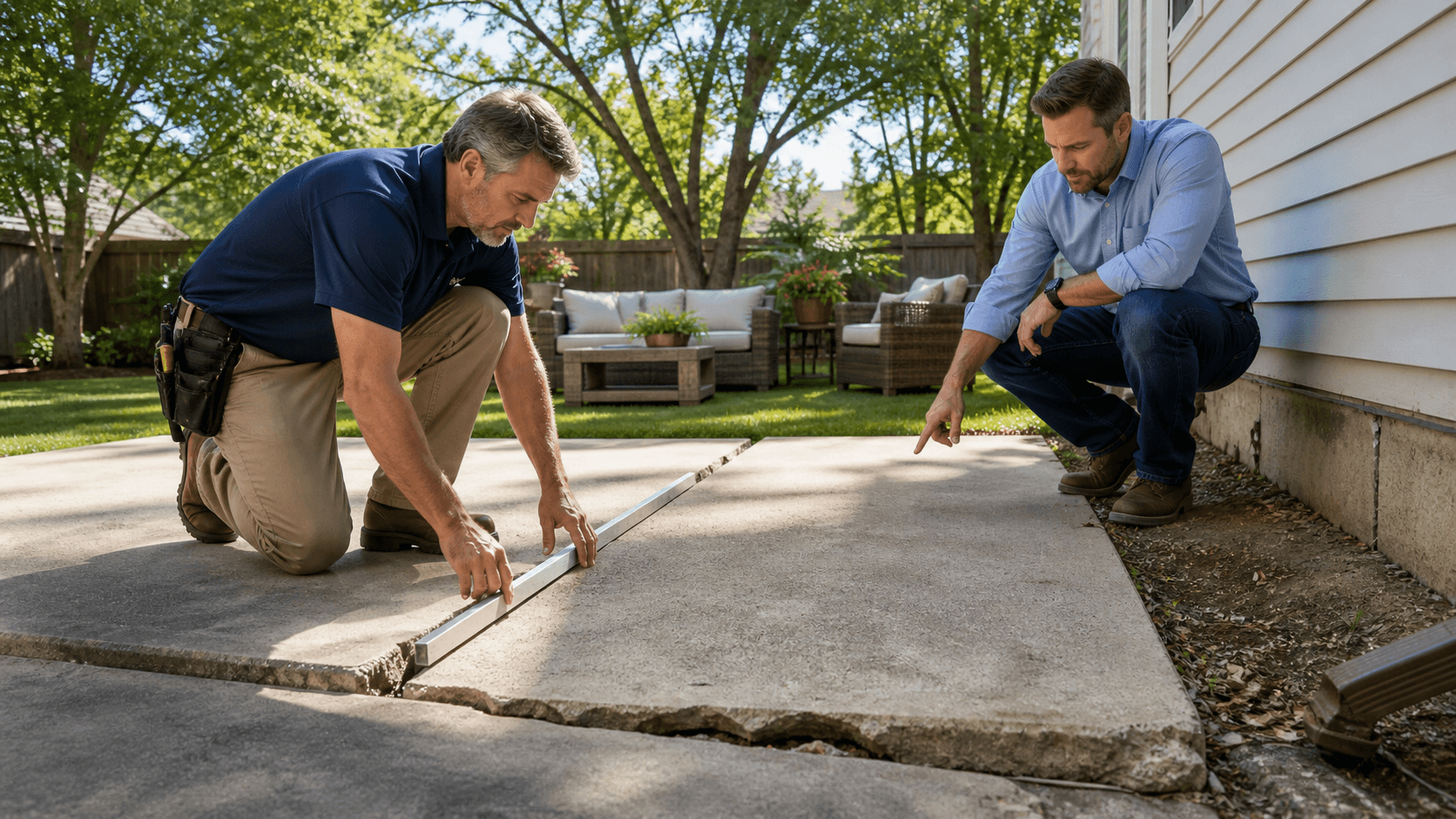
Where your patio meets the house, steps, or other existing slabs, you need isolation or expansion joints. These are flexible gaps that let the patio move slightly without pushing on your foundation or pulling away and cracking.
Without these joints, movement from temperature swings or soil shifts in Joplin can:
- Transfer cracks into your patio from older concrete
- Put pressure on your home's foundation edge
- Cause chipping at door thresholds and steps
Concrete is not static. It expands when it is hot, contracts when it is cold, and reacts to soil changes underneath. A smart layout that respects that movement gives the patio a way to move without breaking itself apart.
Ignoring Joplin's Climate When Choosing Finishes
Finish choices can turn a good slab into a daily headache if they do not fit our climate. Very smooth or glossy finishes can get slippery when wet or icy. That might look sleek in photos, but it is not fun to walk on after a rainstorm.
Decorative overlays or very thin toppings also need to be chosen with care. In a place with regular freeze-thaw cycles, materials that are too tight or fragile at the surface can:
- Peel or flake
- Pop loose in small patches
- Wear quickly in traffic paths
Sealers are another big factor. The right sealer protects against water, stains, salt, and sun. The wrong one might trap moisture inside the slab, especially in our humid, rainy seasons. That trapped moisture can lead to cloudiness, blistering, or surface damage.
Things to consider with sealers include:
- Breathable products that let moisture escape
- Slip resistance after sealing
- How often re-sealing will be needed
Color also affects comfort and performance. Very dark concrete can get extremely hot under late-summer sun in Joplin. That heat can create thermal stress in the slab and make the patio hard to walk on in bare feet.
Lighter or mid-tone colors, along with textured finishes, often:
- Stay cooler in direct sun
- Hide dust and pollen better
- Make small cracks and wear less noticeable
The goal is to pick a finish that fits how you use the space, looks good with your home, and holds up in our local weather, not just one that looks nice on a sample card.
Plan a Patio That Lasts Through Every Joplin Season
Good concrete patio installation in Joplin, MO, is as much about timing and planning as it is about the pour itself. Busy seasons like spring and fall fill up fast, and rushed jobs can skip important design details. Planning early gives the crew time to study your yard, soil, drainage, and how you use your outdoor space before any forms go in.
When you think about your next patio, keep a simple checklist in mind:
- Solid, compacted base and smart drainage paths
- Proper slab thickness and the right reinforcement
- Thoughtful joint layout that respects movement
- Finishes and sealers that match Joplin's climate
- A basic maintenance plan for cleaning and re-sealing
At Ozark Pool and Concrete in Joplin, we design and build patios and outdoor spaces with these details in focus from day one. A little extra thought up front helps your patio stand strong through hot summers, cold snaps, big storms, and years of steady use.
Transform Your Backyard With a Custom Concrete Patio
If you are ready to upgrade your outdoor space with a patio built to last, our team at Ozark Pool and Concrete is here to help. Explore your options for concrete patio installation in Joplin, MO and let us create a design that fits your home and lifestyle. We will walk you through every step, from planning and design to the final pour and finish. Have questions or want to discuss your project? Simply contact us to get started.